I'd look for life on Mars in the composition of its atmosphere, not by crawling around looking for bugs
I’d look for life on Mars in the composition of its atmosphere, not by crawling around looking for bugs.

deep ecology
practices for awakening and resilience in a changing world
I’d look for life on Mars in the composition of its atmosphere, not by crawling around looking for bugs.
“the major problems in the world are the result of the difference between how nature works, and how people think” - Gregory Bateson
“We are the universe becoming conscious of itself” - Brian Swimme

Brian Swimme is a mathematical cosmologist and cultural historian who examines the implications of modern cosmology for human meaning and purpose. Trained as a mathematician at the University of …
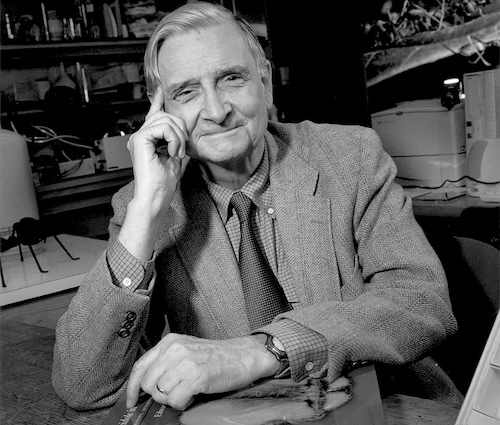
Edward Osborne Wilson (1929-2021) was one of the world’s leading biologists whose groundbreaking research on biodiversity, evolution, and human nature profoundly influenced both scientific …
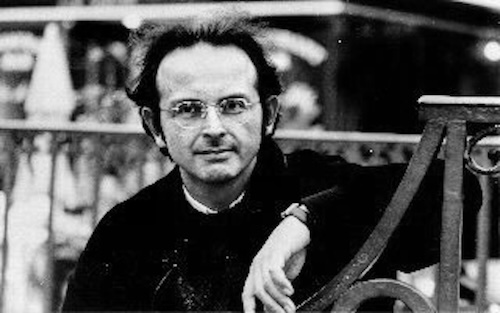
Francisco Varela (1946-2001) was a Chilean biologist, philosopher, and cognitive scientist who developed theories of autopoiesis and enactive cognition. His work integrated biological research with …
Gregory Bateson (1904-1980) was an anthropologist, biologist, and cyberneticist whose groundbreaking work on systems thinking, learning theory, and the “ecology of mind” provided …
“A temperature rise of more than two degrees C risks altering the Earth system irreversibly.” — James Lovelock Source: The Vanishing Face of Gaia (2009)
“Climate change is real, and it is here, and we either change or we suffer.” — James Lovelock Source: Interviews / Essays
“Gaia is a very simple idea: that the Earth works as a single, complex, self-regulating system.” — James Lovelock Source: The Ages of Gaia (1988)
“If we go on wrecking the biosphere, our technical and moral loftiness will count for nothing.” — James Lovelock Source: The Vanishing Face of Gaia (2009)
“Let us hope that humanity will see through science that it must live in harmony with all life, not just exploit it.” — James Lovelock Source: The Vanishing Face of Gaia (2009)
“Our task is not to save the Earth. She will endure. It is our civilization, our children, who are at risk.” — James Lovelock Source: The Vanishing Face of Gaia (2009)
“Bacteria are the hidden alchemists of the planet, shaping the atmosphere and the future.” — Lynn Margulis Acquiring Genomes (2002)
“Evolution is not a tree but a web. Symbiosis is the driving force.” — Lynn Margulis Acquiring Genomes (2002)
“Life did not take over the globe by combat but by networking.” — Lynn Margulis Microcosmos (1986)
“Symbiosis is not marginal. It is the key to evolution and survival.” — Lynn Margulis Acquiring Genomes (2002)
“The human body is not a single being but a consortium of species.” — Lynn Margulis Symbiotic Planet (1998)
“To understand life, we must understand the partnerships that make it possible.” — Lynn Margulis Microcosmos (1986)
“We are walking communities of microbes, proof that cooperation drives life forward.” — Lynn Margulis Symbiotic Planet (1998)
“Gaia is a tough bitch: she has endured cataclysmic change for billions of years.” — Lynn Margulis Symbiotic Planet (1998)
“All the world’s systems are interconnected; nothing exists in isolation.” – Joanna Macy Source: World as Lover, World as Self (1991)
“Science taught us that change is inevitable; wisdom teaches us to change with it.” — James Lovelock Source: Late Interviews
“The Gaia hypothesis tells us that life and the Earth are inseparable, two sides of one great process.” — James Lovelock Source: Gaia: A New Look at Life on Earth (1979)
“The planet we abuse will find ways to restore balance, but not necessarily in ways that are kind to us.” — James Lovelock Source: The Revenge of Gaia (2006)
“We are part of Gaia’s experiment. Whether we remain part of her future depends on how we live now.” — James Lovelock Source: The Ages of Gaia (1988)
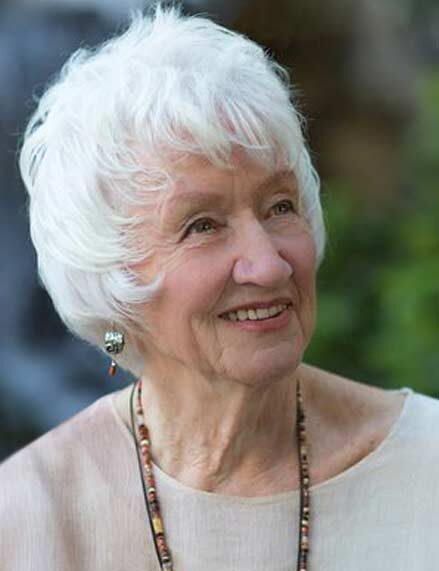
Elisabet Sahtouris is an American and Greek evolution biologist, futurist, and author whose work emphasises how cooperation and symbiosis, rather than competition alone, drive evolutionary processes. …
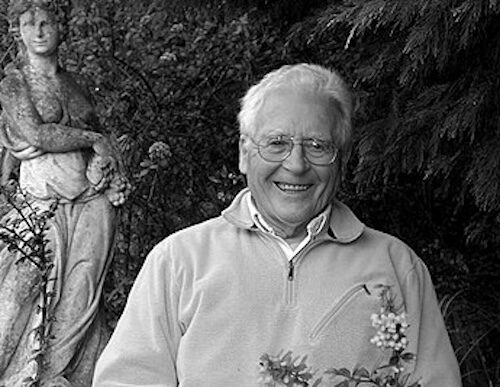
James Ephraim Lovelock (1919-2022) was an independent scientist who formulated the Gaia hypothesis in the early 1970s. Working outside academic institutions, he proposed that Earth functions as a …
Lynn Margulis (1938-2011) was an American evolutionary biologist whose endosymbiotic theory proposed that complex cells arose through symbiotic mergers of simpler organisms. Her work emphasized …
“All life is interdependent; we cannot survive without the web of relationships that sustain us.” – Joanna Macy Source: Coming Back to Life, 1998
“When I first saw Gaia in my mind I felt as an astronaut must have done as he stood on the Moon, gazing back at our home, the Earth. The feeling strengthens as theory and evidence come in to confirm …
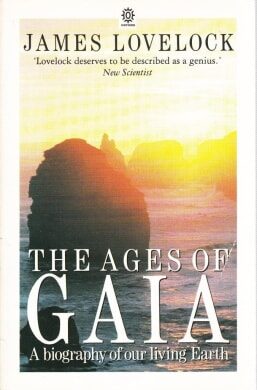
“The Ages of Gaia – A Biography of Our Living Earth” – by James Lovelock 1989, Oxford University Press. In this excellent volume James Lovelock returns to Gaia theory to lead us on an accessible …
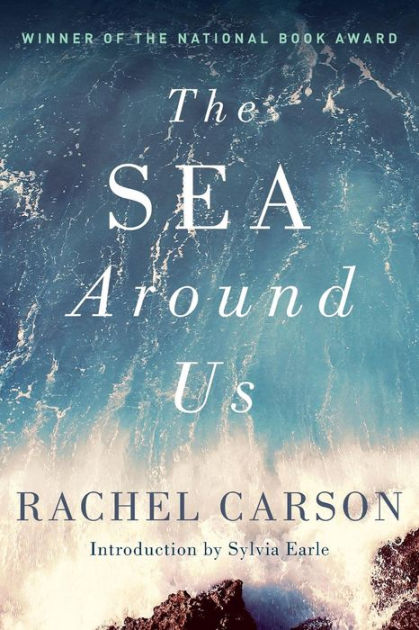
The Sea Around Us is a prize-winning and best-selling book by the American marine biologist Rachel Carson, first published as a whole by Oxford University Press in 1951. It reveals the science and …