Gaia theory forces a planetary perspective
Gaia theory forces a planetary perspective. It is the health of the planet that matters, not that of some individual species.
deep ecology
practices for awakening and resilience in a changing world
Gaia theory forces a planetary perspective. It is the health of the planet that matters, not that of some individual species.
Humans on Earth behave in some ways like a pathogenic micro-organism, or like the cells of a tumor.
I’d look for life on Mars in the composition of its atmosphere, not by crawling around looking for bugs.
Whenever philosophers and scientists have tried to explain how life evolved, they have made the same mistake: they’ve assumed that the environment was fixed and that the organisms simply …
The concept that the biosphere is able to regulate the climate and the chemistry at a comfortable level for life is the Gaia hypothesis.
The Earth is more than just a home, it’s a living system and we are part of it.
The Gaia hypothesis is for those who like to walk or simply stand and stare, to wonder about the Earth and the life it bears.
We have given Gaia a fever and soon her condition will worsen to a state like a coma. She has been there before and recovered, but it took more than 100,000 years.
“A temperature rise of more than two degrees C risks altering the Earth system irreversibly.” — James Lovelock Source: The Vanishing Face of Gaia (2009)
“Climate change is real, and it is here, and we either change or we suffer.” — James Lovelock Source: Interviews / Essays
“Earth does not need people. People need Earth.” — James Lovelock Source: Interviews / Talks
“Gaia is a very simple idea: that the Earth works as a single, complex, self-regulating system.” — James Lovelock Source: The Ages of Gaia (1988)
“Humanity is not separate from Gaia; we are a part of her body. To harm her is to harm ourselves.” — James Lovelock Source: Gaia: The Practical Science of Planetary Medicine (1991)
“If we go on wrecking the biosphere, our technical and moral loftiness will count for nothing.” — James Lovelock Source: The Vanishing Face of Gaia (2009)
“Let us hope that humanity will see through science that it must live in harmony with all life, not just exploit it.” — James Lovelock Source: The Vanishing Face of Gaia (2009)
“Our task is not to save the Earth. She will endure. It is our civilization, our children, who are at risk.” — James Lovelock Source: The Vanishing Face of Gaia (2009)
“Science taught us that change is inevitable; wisdom teaches us to change with it.” — James Lovelock Source: Late Interviews
“The future depends on whether we can act on respect for Gaia rather than on fear.” — James Lovelock Source: Interviews
“The Gaia hypothesis tells us that life and the Earth are inseparable, two sides of one great process.” — James Lovelock Source: Gaia: A New Look at Life on Earth (1979)
“The planet we abuse will find ways to restore balance, but not necessarily in ways that are kind to us.” — James Lovelock Source: The Revenge of Gaia (2006)
“We are part of Gaia’s experiment. Whether we remain part of her future depends on how we live now.” — James Lovelock Source: The Ages of Gaia (1988)
“We have to accept that we are modest parts of the functioning of Earth, not its masters.” — James Lovelock Source: Healing Gaia (1991)
“We need to recognise the fragility of our existence and the need to conserve the balance.” — James Lovelock Source: Lectures
“We need to see ourselves not as stewards of nature, but as participants in a vast, living system.” — James Lovelock Source: The Ages of Gaia (1988)
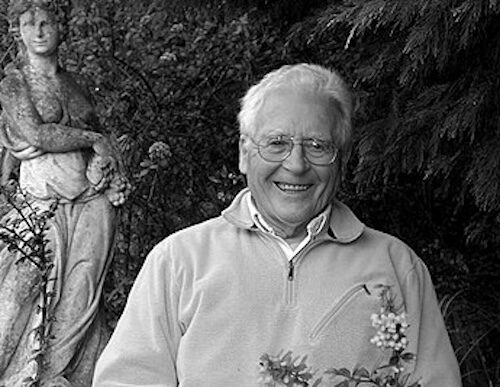
James Ephraim Lovelock (1919-2022) was an independent scientist who formulated the Gaia hypothesis in the early 1970s. Working outside academic institutions, he proposed that Earth functions as a …
“When I first saw Gaia in my mind I felt as an astronaut must have done as he stood on the Moon, gazing back at our home, the Earth. The feeling strengthens as theory and evidence come in to confirm …
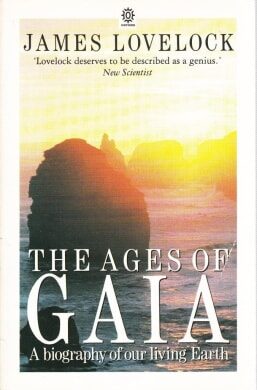
“The Ages of Gaia – A Biography of Our Living Earth” – by James Lovelock 1989, Oxford University Press. In this excellent volume James Lovelock returns to Gaia theory to lead us on an accessible …